Coding Provenance Workshop
Second Edition
This is the materials site for the second edition of the Coding Provenance Workshop: four days on computational provenance, meaning provenance research with statistics, network analysis, optical character recognition, large language models and natural language processing. Here you find the sessions, the readings and the materials for each step of the workflow.
Materials
| No. | Entry | Part | Status |
|---|---|---|---|
| 001 | Second Online SessionAgenda, recordings and slides. | Online session | To come |
| 002 | Structuring DataOrganising provenance data into consistent structures. | Workflow, step 1 of 4 | To come |
| 003 | Preprocessing DataCleaning, standardising and preparing data. | Workflow, step 2 of 4 | To come |
| 004 | Analysing DataMethods and approaches for analysis. | Workflow, step 3 of 4 | To come |
| 005 | Visualising DataCharts, maps and networks. | Workflow, step 4 of 4 | To come |
| 006 | Bibliography & ResourcesReadings, tutorials, tools and datasets. | Reference | Entered |
About the workshop
After decades working as provenance and art history researchers, we have watched the field change in many ways. Computational techniques and a more data-driven approach can reveal patterns, structures and dynamics that are hard to uncover through close reading, and lead to research questions that were previously impossible to answer or even to ask. We call it computational provenance: provenance research using statistics, network analysis, optical character recognition, large language models and natural language processing.
This workshop gives researchers and practitioners a first encounter with these theories, methods and tools, so they can bring new policies, methods and techniques into their institutions and their own research. Interdisciplinary work with computer scientists and digital humanities specialists is extremely valuable, and fair and equal collaboration starts with a good understanding of what can be done and how.
- Organisers and instructors
- Bárbara Romero FerrónProvenance Lab, Leuphana University of Lüneburg
- Lynn RotherProvenance Lab, Leuphana University of Lüneburg
- Sandra van GinhovenGetty Provenance Index, Getty Research Institute
- Schedule
- To be announced
- Workshop home
- Coding Provenance Workshop
Plates
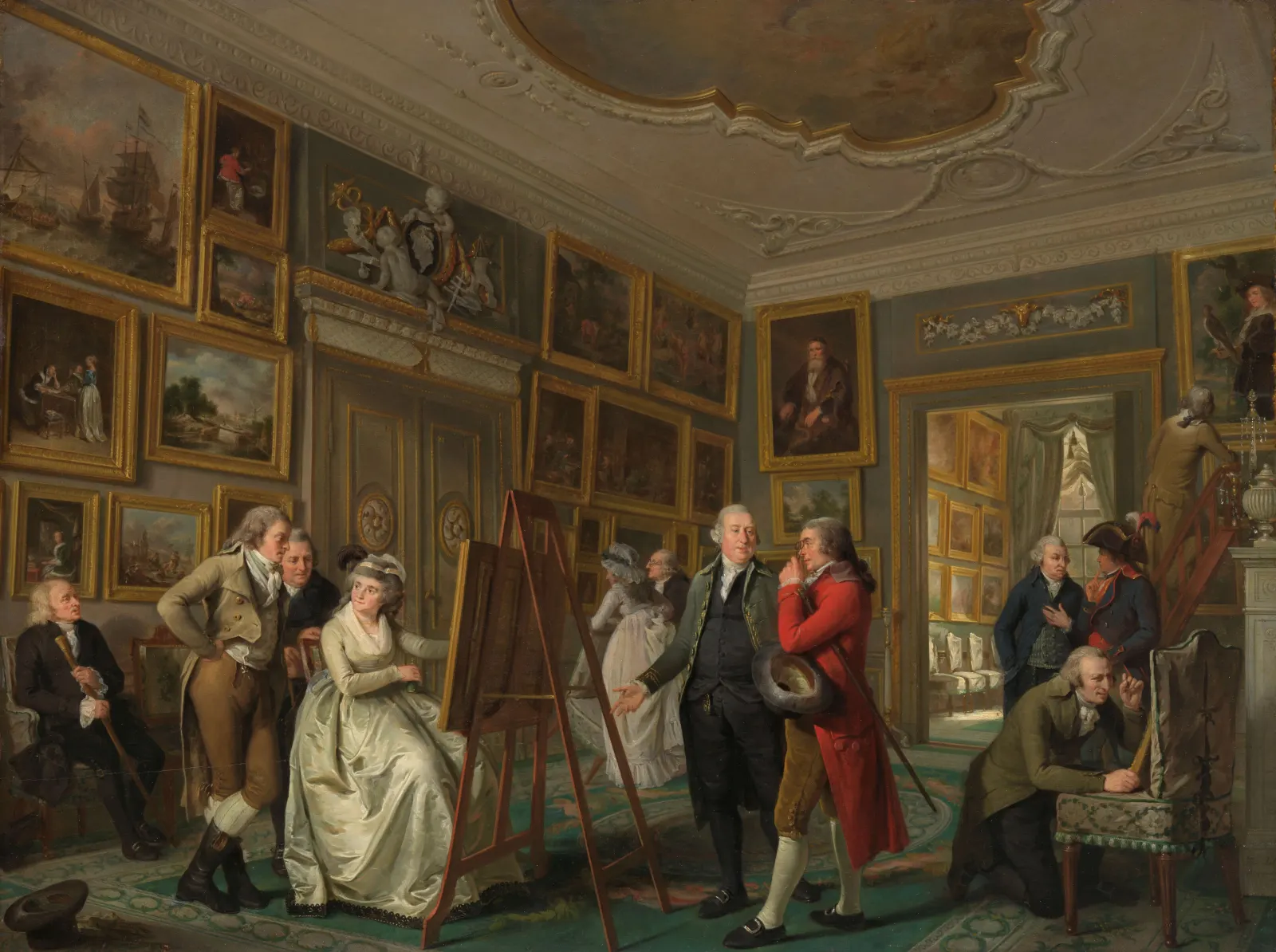
Each workflow page carries one painting with its record and provenance.